
Key Takeaway: Sophisticated tax planning requires more than individual strategies. For ultra-high-net-worth individuals and families, effective wealth preservation depends on coordinating tax efficiency, asset protection and multigenerational planning.
Handler Law Managing Partner Tom Handler presented Tax Hacks of the Rich, Decoded at REBELCON 2026 in Las Vegas, exploring advanced tax planning strategies and structures used by ultra-high-net-worth individuals and family offices.
The presentation highlighted several key considerations:
Integrated Wealth Planning.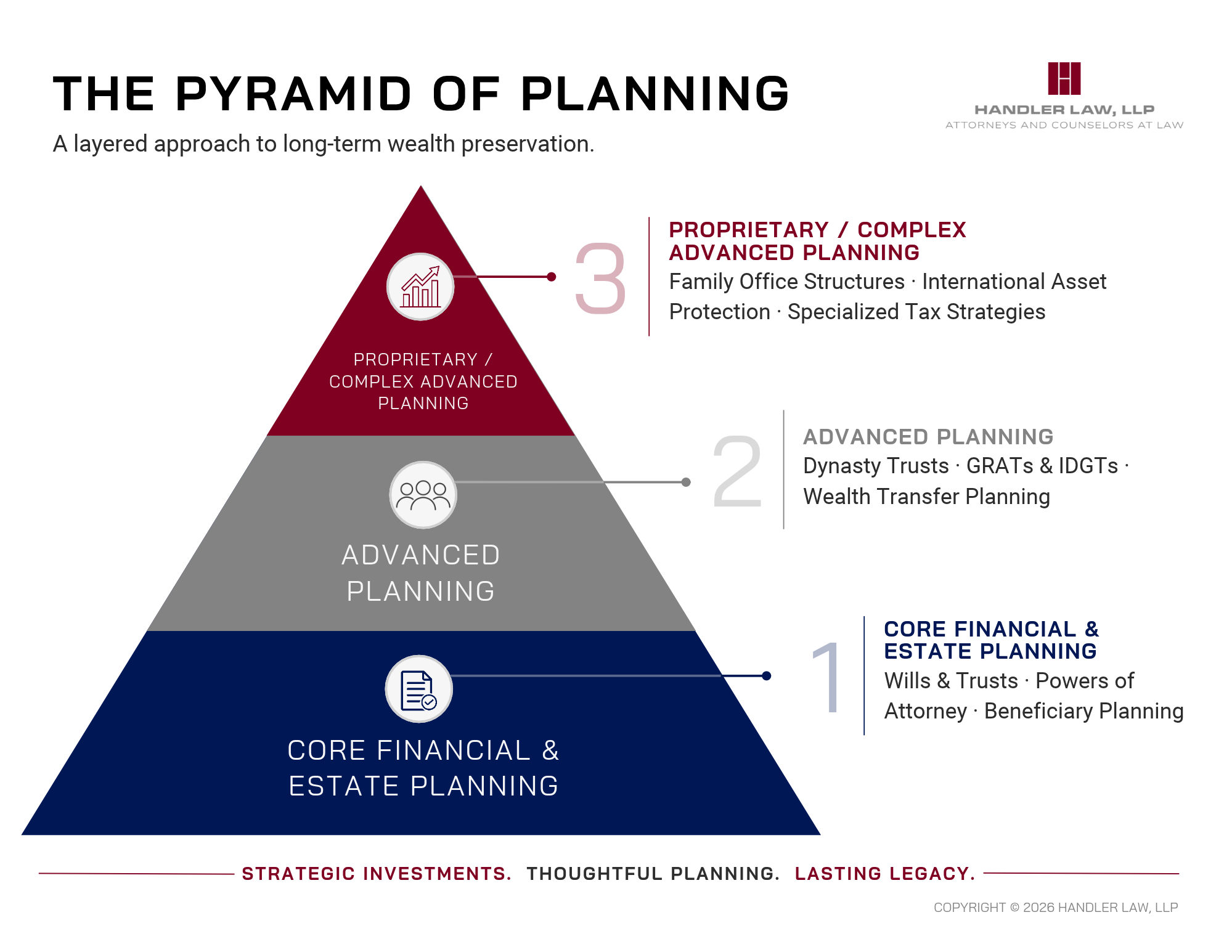
Effective strategies build upon core financial and estate planning, incorporating advanced trusts, family office structures and coordinated tax planning to address complex wealth preservation objectives.
Estate and Generational Wealth Transfers.
Dynasty trusts, grantor retained annuity trusts (GRATs) and intentionally defective grantor trusts (IDGTs) are among the structures available to facilitate multigenerational wealth transfers and address estate and gift tax exposure.
Asset Protection and Tax Jurisdiction.
International asset protection trusts, state income tax differences and changing residency patterns underscore the importance of considering jurisdiction when developing wealth preservation strategies.
Advanced Income Tax Strategies.
Private placement life insurance, qualified small business stock under Section 1202, accelerated depreciation and other tax planning techniques present opportunities that require careful evaluation and structuring.
The Bottom Line
The most effective wealth planning strategies are rarely implemented in isolation. By integrating tax, estate and asset protection planning, ultra-high-net-worth individuals and families can develop more comprehensive approaches to preserving wealth across generations.